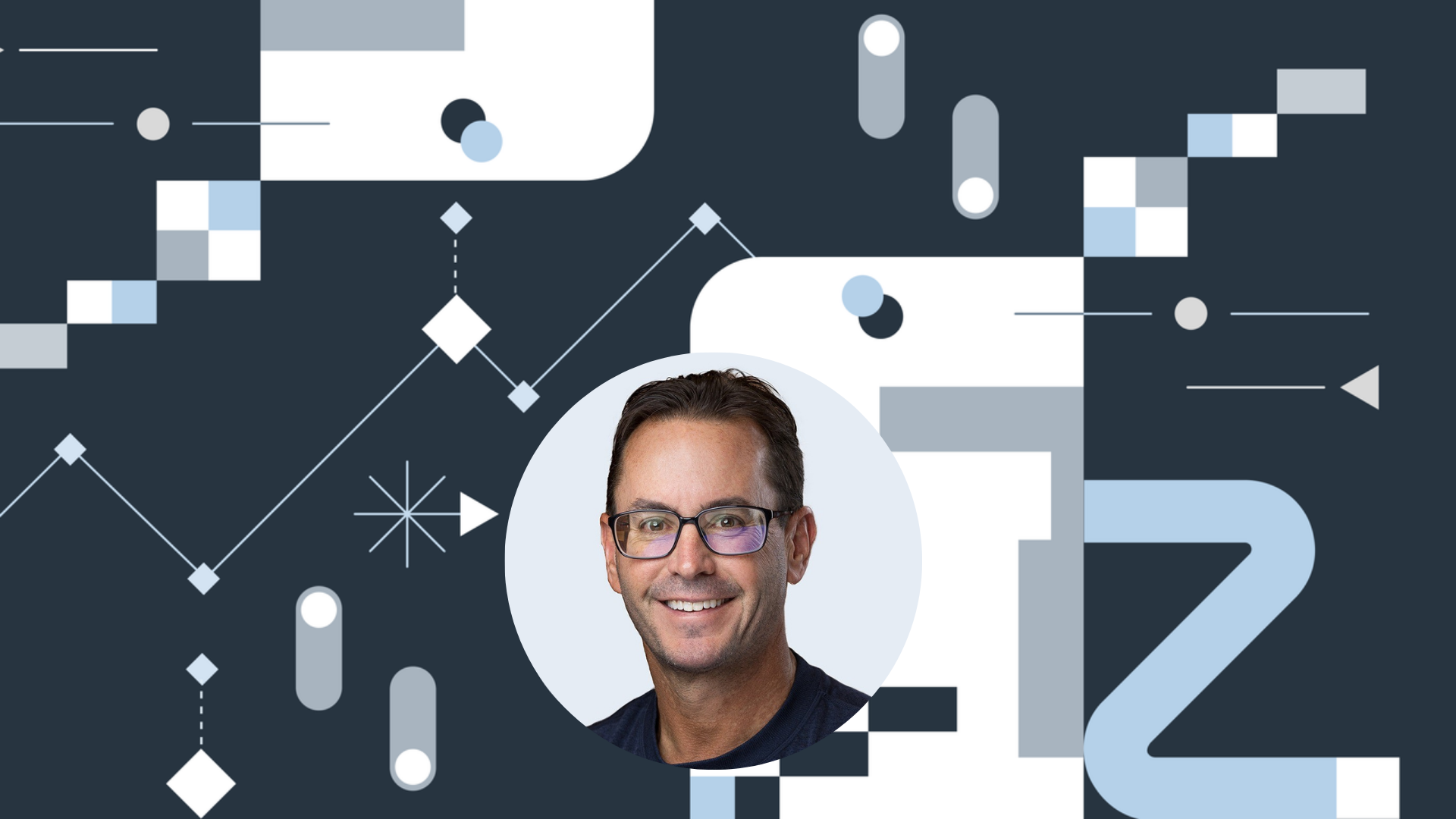
Sean Raynor: Three Decades of Leadership in Dealer Software
Sean Raynor didn’t plan on a career in dealership software, he more or less stumbled into it. Shortly after college, his roommate started selling boats at a dealership that had recently purchased a new ERP system. Their team wasn’t entirely sure how to use it, so Sean spent three months helping them figure it out. This experience led to his first job in dealer software and, ultimately, a career spanning more than three decades.
Today, as President of Constellation Dealer Group, Sean brings experience from both sides of the business: years spent operating software companies directly and now supporting leaders across a portfolio of businesses serving the dealer market.
We sat down with Sean to discuss what has keeps him engaged in the dealership industry, and what he believes separates great software businesses from the rest.
Q: You’ve spent more than 30 years in dealership software. What has kept you interested in it for this long?
Sean: I’ve always been captivated by the grind of continuous improvement. Technology is always changing, but the core problem remains the same: how do you help a dealer run a complicated business better? That’s never been a boring problem to solve.
Over the course of my career, I’ve also had a front-row seat to some enormous shifts in technology. The personal computer in the 1990s, the internet in the 2000s, and now artificial intelligence have each fundamentally changed how dealerships operate. Business that once happened almost entirely inside a brick-and-mortar location can now happen digitally, often from your phone.
Today, I think we’re entering another important transition. Dealer software is moving from being primarily a system of record to becoming a system of insight. We’re no longer just helping dealers capture and manage information. Increasingly, the opportunity is to help them understand that information and use it to make better decisions. That shift is changing what “good software” means in this industry.
Q: After spending years as an operator, what changed when you moved into portfolio leadership?
Sean: The biggest transition is going from “I know how to run this business” to “I need to understand what makes fifteen different businesses tick.”
As an operator, you often feel like your job is to have the answers. As a portfolio leader, I think your job is much more about asking the right questions. You need to make sure the right people are in place, that they have what they need to succeed, and then get out of their way. When they need help, you coach them.
I try not to be prescriptive before I diagnose the patient. Every business is different. You have to understand its specific nuances first and then help the team distill what they are trying to accomplish down to three to five key objectives. From there, you can get the organization laser-focused on those priorities and make sure every employee understands how they contribute.
Q: You now have the benefit of seeing many different software businesses up close. What separates the good ones from the great?
Sean: Great people are the starting point for a thriving business. Beyond that, I think the strongest businesses understand that the customer relationship is the asset and the software is the expression of it.
The businesses that struggle sometimes have that backwards. They think the code itself is the moat.
That’s why I pay so much attention to loyal customers and renewals. Product development matters, of course, but a missed feature is a lost opportunity; a lost customer is a lost decade.
I’d rather have a leadership team obsessed with understanding why its customers stay than one that is only obsessed with what is coming next on the roadmap. The strongest leadership teams tend to share that mentality. They complement each other’s strengths, work together rather than as individuals, and are obsessed with building deep and enduring customer relationships.
Q: AI is creating another major shift in dealer technology. Where do you think the biggest opportunity actually lies?
Sean: I don’t think the biggest opportunity is necessarily in flashier features. It’s in collapsing the busywork that eats up a dealer’s day. There’s a temptation right now to bolt a chatbot onto a product and call it innovation. I think the bigger opportunity is to use AI to make the existing product more intuitive, more useful and almost invisible in the way it supports the customer. The winners will be the businesses that make their software indispensable to the dealer’s day-to-day operations.
That’s what makes this period so interesting. AI is obviously a new technology, but the fundamental question is one we’ve been trying to answer for decades.
Q: What have you learned about finding and developing great leaders?
Sean: One lesson I wish I had learned earlier is to spend a lot of your time and attention finding the right people.
Earlier in my career, I thought of recruitment as a chore that sat somewhere down my priority list. I made some bad hiring decisions, and they set us back. Over time, I learned that the right people will do things better than you could. They’ll think about problems differently, challenge assumptions and ultimately allow the business to reach its full potential.
Today, I look for intellectual curiosity that survives a bad week. I want people who are focused on continuous improvement, put the customer first, work well as part of a team and are willing to fail and learn from those failures.
That becomes especially important in a decentralized organization. We don’t force best practices across businesses. We make sure good ones travel. Each business retains its own identity and makes its own decisions. What we can share is information: what worked, what didn’t and who you can call when you’re facing a problem someone else has already encountered.
Q: What still excites you about the work?
Sean: At this stage of my career, I see a big part of my responsibility as helping people pursue opportunities within our businesses. We’re fortunate to manage a portfolio of growing companies, and when businesses grow, they create opportunities for people.
Watching someone take on a new challenge, develop new capabilities and eventually step into a bigger role is incredibly rewarding. At this point, helping create those opportunities is one of the things that keeps me most engaged.
—
Rapid Fire with Sean
Coffee or tea? Black coffee until about noon, ideally starting before 6 a.m., courtesy of old training habits.
First job? I sold books door-to-door for a summer in college. It was a life lesson in perseverance and understanding people.
Best book you’ve read? The Old Man and the Sea by Ernest Hemingway. As a fisherman, it speaks to me on so many levels.
A technology you’re excited about? A personal AI agent that can make my work and personal life much more productive. I’m early in developing my own personal assistant.
A hobby people might not know about? I competed in triathlons for 12 years and finished seven Ironmans and about 20 Half Ironmans. These days, I put that same stubbornness into fly fishing in places that are hard to get to.
If you weren’t in software, what would you be doing? I’ve always been curious about aviation and have never taken flying for granted. I think it would be cool to sell airplanes. I love a complex sales process.
Back to Insights