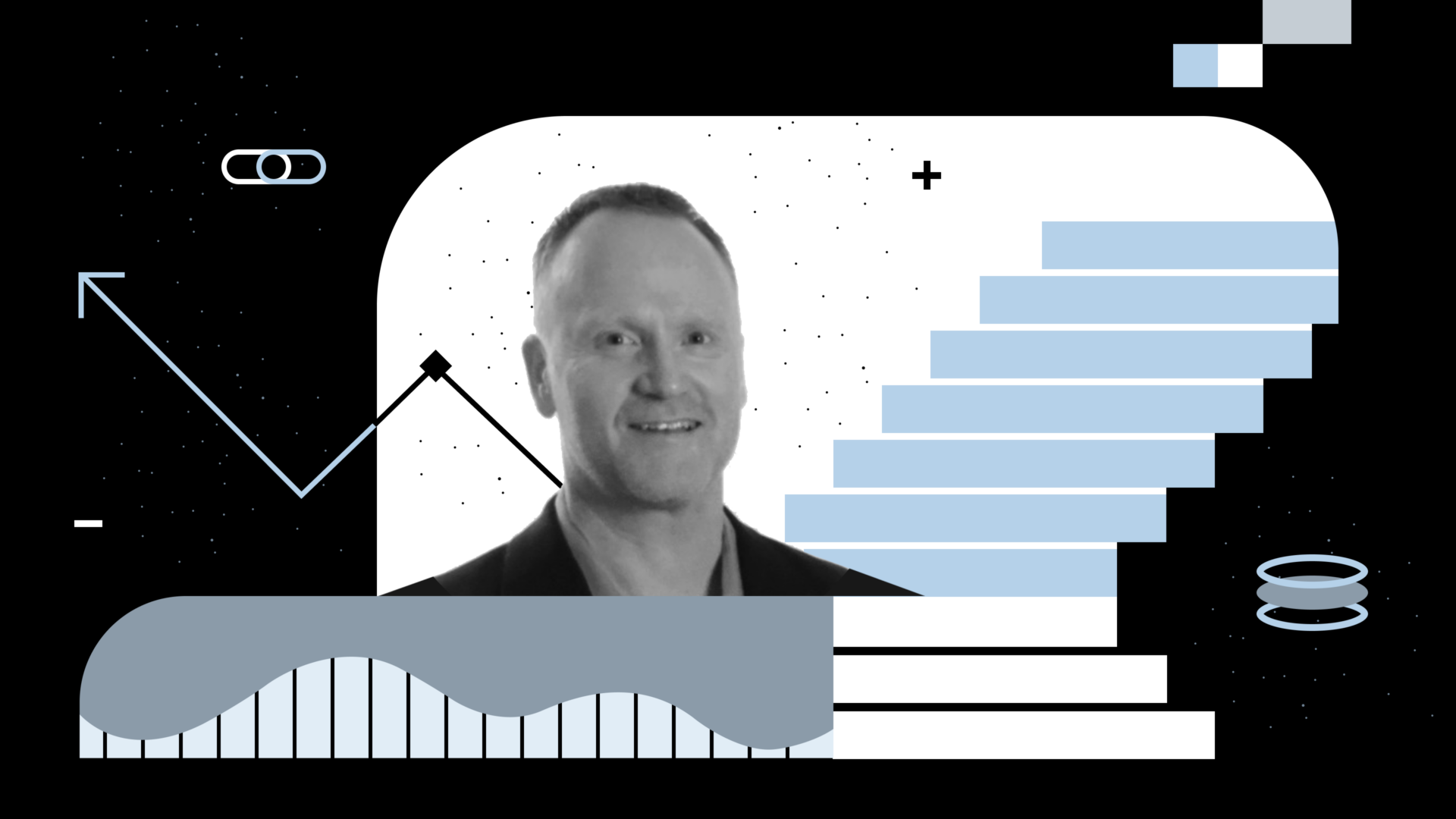
Leadership Spotlight – David Maggs on Leading Ediwise Through Change
When David Maggs joined Ediwise as Development Manager in 1997, he saw an opportunity to make a difference within a small software team. Nearly three decades later, he has helped lead the business through industry shifts, ownership changes, and a renewed focus on growth.
For David, Ediwise’s acquisition by Perseus Group in 2018 marked a turning point. Moving out of a paper company and into a software organization brought new responsibilities, closer collaboration with other businesses, and room to pursue opportunities that had previously been difficult to reach.
In this Q&A, David reflects on his path into leadership, the realities of navigating a carve-out, and what continues to motivate him as Ediwise’s General Manager.
How did you first become interested in software?
It started with a Christmas present. My dad bought my brother and me a Commodore 64 when we were hoping for a gaming console. We were disappointed at first, but it ended up shaping my career. I started exploring programming in BASIC on my own. By the time my high school introduced its first computing course, I had spent a whole summer learning the language.
I went on to study math, computer science, and business at the University of Waterloo. The co-op program was a big draw because it gave me experience in network management and software development while I was still studying. My first job after university was in the pharmaceutical industry, where my work gradually shifted more toward development.
What brought you to Ediwise, and where did you see room to contribute?
The pharmaceutical company I worked for merged with another business and moved its head office from Mississauga to Montreal. I had a young family and wanted to stay in the area, so I started looking for another role.
Ediwise offered a chance to move into management, working with a small team within a larger company. I joined as Development Manager in 1997. At the time, development was happening on the fly. There wasn’t much quality assurance, and releases needed more planning. That gave me some clear opportunities to help. We worked toward a single code base, and I asked the developers what they liked and what needed to improve. Then we went to work on their suggestions.
What was happening in the Ediwise business before they were acquired by Perseus in 2018?
I had moved into the General Manager role in 2008, which was a difficult period for our parent company. Our business served the newspaper industry, and its decline was putting pressure on us.
Our owners were focused on making paper and pulp, so software wasn’t central to their business. We had developed products for them, but selling those products to other paper companies was difficult because those companies would effectively be buying from a competitor.
That limited our ability to grow. When discussions with Perseus began, I was excited about joining a parent company that understood software and the markets we served. I saw an opportunity to get the support and expertise we needed to take the business further.
What changed most once Ediwise became part of Perseus?
In some ways, it felt like becoming a new company, even though we’d been around for decades. We took on greater responsibility for expenses and functions our previous parent company had managed, including HR, payroll, and legal support. Financial reporting, sales, and business performance also became a bigger part of our day-to-day work.
There was a lot to learn, but the Perseus team helped us navigate the transition. We could also draw on the experience of other businesses in Perseus’s manufacturing portfolio, which was tremendously helpful as we adjusted.
How has being part of a larger software organization helped the team grow?
The collaboration has been valuable. I meet with other General Managers in our group every two weeks. Our support and development teams also connect with their peers, and programs such as the Perseus Epic create opportunities to learn.
Through Contour, we’ve expanded our development capacity from one developer in 2018 to a team of five developers and two quality assurance specialists. We couldn’t have achieved the growth we’ve seen without them.
Our partnership with MAJIQ, a software business serving the pulp and paper industry within the Perseus portfolio, has also helped us grow our warehouse software and EDI offerings. Working with their team and attending their customer meetings has opened opportunities we wouldn’t have had on our own.
What principles guide the way you lead?
Everyone is different, and you have to work out how to be effective with each person. I’ve managed people for almost 30 years, raised three children, and coached my son’s hockey team for five years. There are a lot of similarities in that respect.
Leading by example matters, too. During one of my early work terms, I had a boss who left early to golf most summer afternoons. I remember telling my dad I couldn’t wait to be in that position. But when I became a manager, I didn’t do that. You have to think about the example you’re setting.
Work-life balance is also important to me. I wanted to be involved in my children’s activities, and I understand that other people have those priorities too. Sometimes a deadline or an emergency requires extra work, but balance has always been something I’ve wanted to protect.
What are you most proud of, and where do you see the next opportunities for Ediwise?
I’m proud of how we’re growing our other offerings while continuing to support customers in a difficult publishing market. That has taken a tremendous effort from our team and people at MAJIQ.
The opportunity now is to keep growing our warehouse software and EDI customer base, deepen our partnerships in pulp and paper, and potentially expand into other industries when the time is right.
For me personally, there’s still a lot to do here. We’ve changed the company considerably since the acquisition, and I’m happy to keep building on that. I want Ediwise to be known as a good place to build a career and a business that helps customers achieve their goals.
Back to Insights