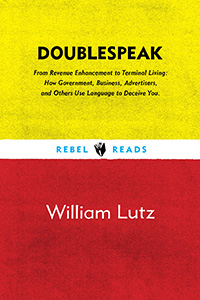
William Lutz dissects the deliberately misleading language used by governments, corporations, advertisers, and bureaucracies to obscure unpleasant truths and evade accountability. He categorizes the techniques — euphemism, jargon, gobbledygook, and inflated language — and shows how they are deployed to make the bad sound acceptable and the trivial sound profound. […]
Read More… from Doublespeak
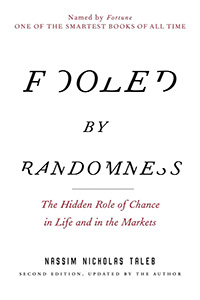
Nassim Nicholas Taleb explores how human beings systematically underestimate the role of chance in markets, careers, and everyday life, mistaking luck for skill. Drawing on probability, philosophy, and his own experience as a trader, he shows how survivorship bias and narrative thinking lead us to construct false explanations for outcomes that are largely random. […]
Read More… from Fooled by Randomness
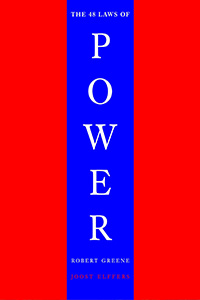
Robert Greene synthesizes three thousand years of history, philosophy, and political maneuvering into a set of forty-eight unflinching rules for acquiring and protecting power. Each law is illustrated with stories of figures who mastered it and those who were destroyed by ignoring it, covering tactics for influence, perception, alliances, and self-presentation. Provocative and often amoral, […]
Read More… from The 48 Laws of Power
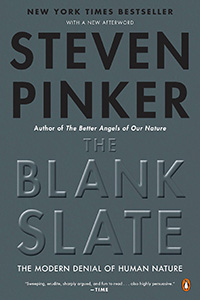
Steven Pinker mounts a sweeping case against the long-held belief that the human mind is a blank slate shaped entirely by culture and environment, defending instead the reality of human nature as revealed by genetics, evolution, and cognitive science. He traces how this denial has distorted debates about politics, parenting, gender, violence, and the arts, […]
Read More… from The Blank Slate
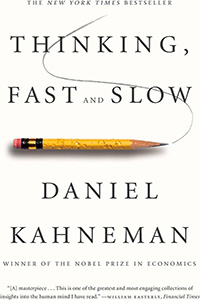
Nobel laureate Daniel Kahneman synthesizes decades of research with Amos Tversky to describe the two systems that drive how we think: a fast, intuitive, emotional System 1, and a slower, more deliberate, logical System 2. He catalogues the cognitive biases and illusions that arise from their interplay: anchoring, availability, loss aversion, overconfidence, and shows how […]
Read More… from Thinking, Fast and Slow
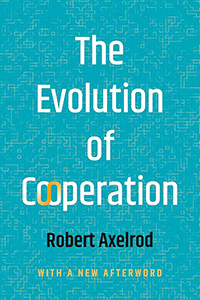
Robert Axelrod investigates one of the deepest puzzles in biology and social science: how cooperation can emerge and persist among self-interested actors in a world without central authority. Using computer tournaments built around the repeated Prisoner’s Dilemma, he shows why a simple strategy — Tit for Tat, which begins by cooperating and then mirrors the […]
Read More… from The Evolution of Cooperation